The ceiling is the surface you see most and think about least
The ceiling is the largest surface of a living room that nobody touches, and yet it sets the mood of every evening. When it is treated as an afterthought, a flat white plane with a single light in the middle, the room tends to feel lower and harder than it really is, however beautiful the sofa and the rug may be.
This is why we look up before we look at the furniture. A living room is lived mostly seated, with the eye resting somewhere between the walls and the ceiling, and the way light falls from above decides whether that moment feels calm, festive or simply flat. Good living room ceiling design is less about decoration than about giving the room a sky that matches the life beneath it.
 View full size
A double-height room needs a ceiling that brings it back to human scale
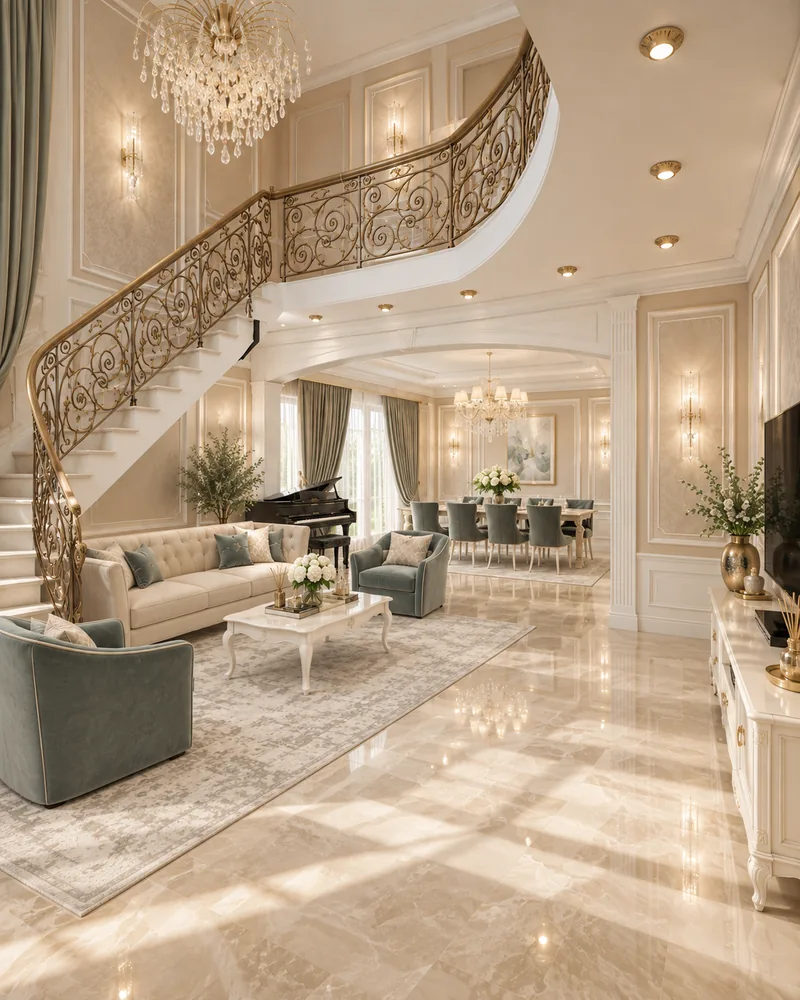
A double-height living room is generous, but it can also feel like a hall in which people seem small. The answer is rarely to fill the height; it is to give the eye a point of focus that draws the space together and makes it feel inhabited.
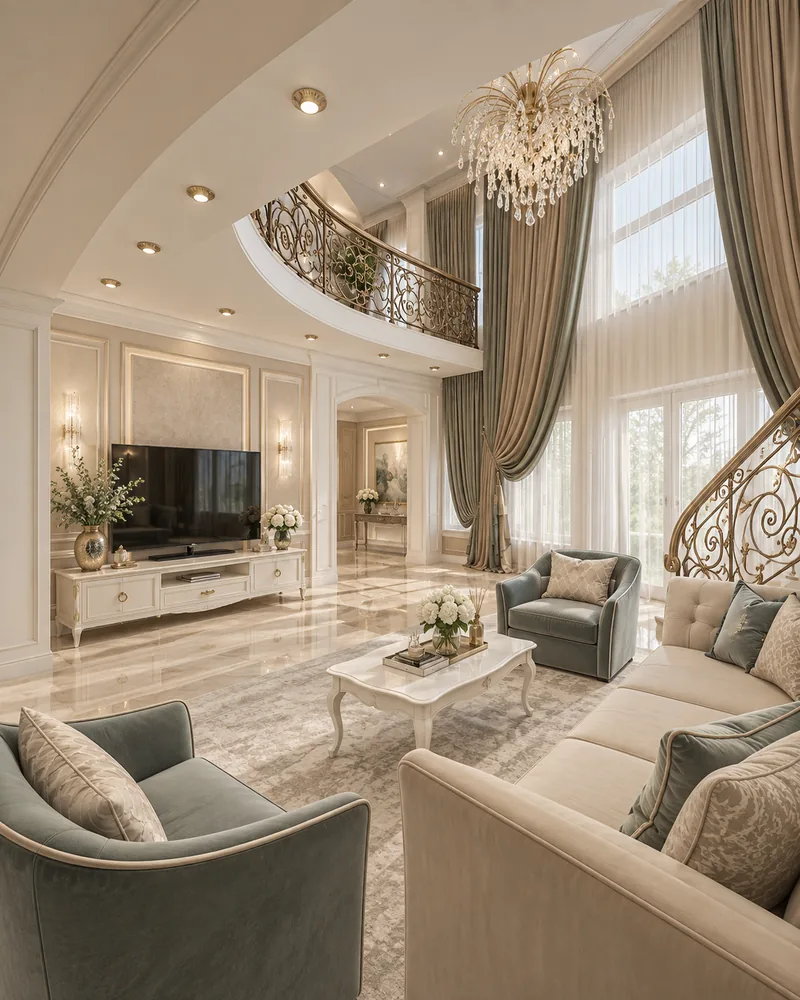
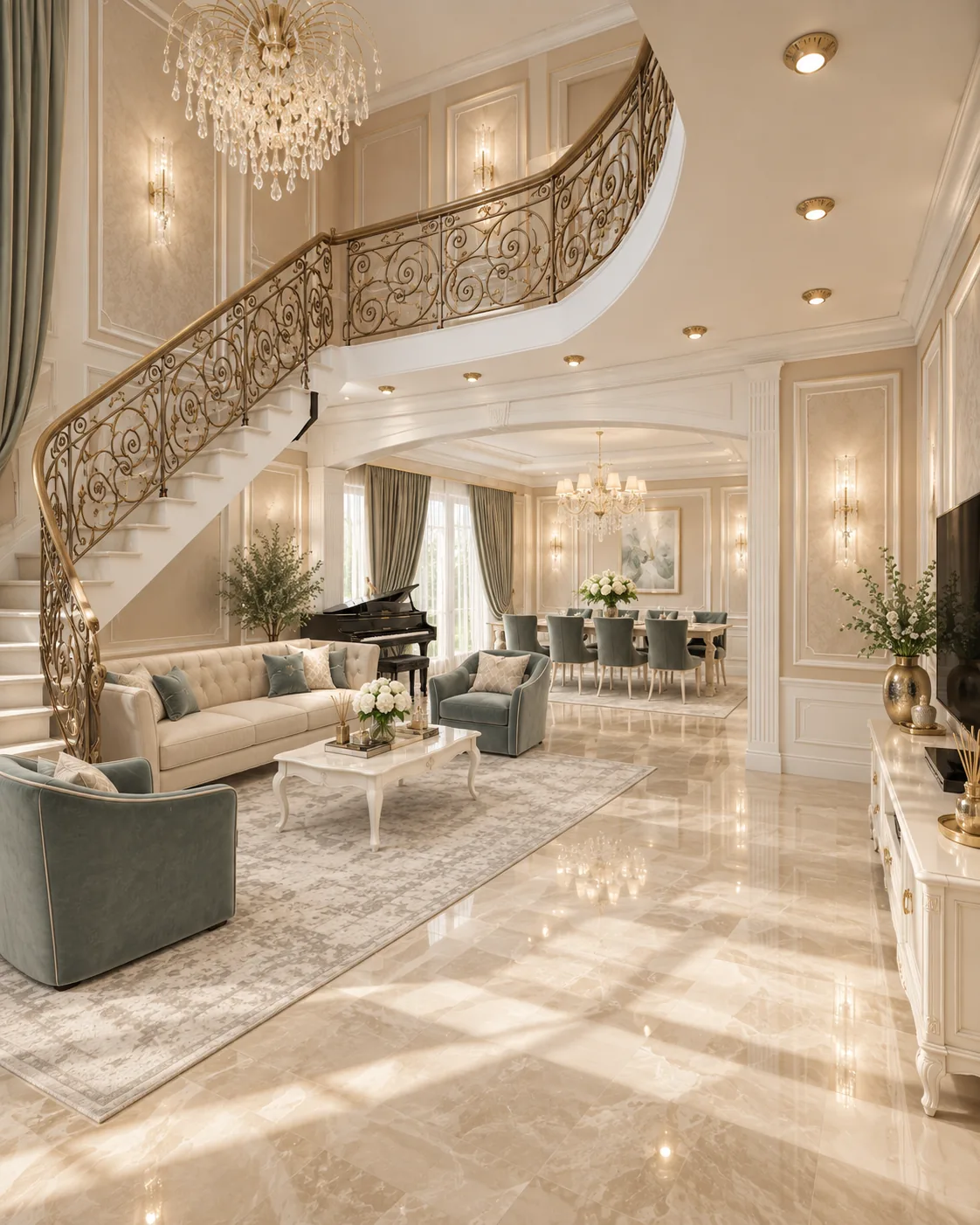
In a classic house on two floors that we designed, a curved staircase with a gilded wrought-iron balustrade rises through the living room, and a cascading crystal chandelier falls from the ceiling towards the seating. The chandelier does the work a lower ceiling would do: it brings the light down to the cream tufted sofa, the sage velvet armchairs and the grand piano, and the room feels intimate despite its height.
Coves turn light into atmosphere instead of glare
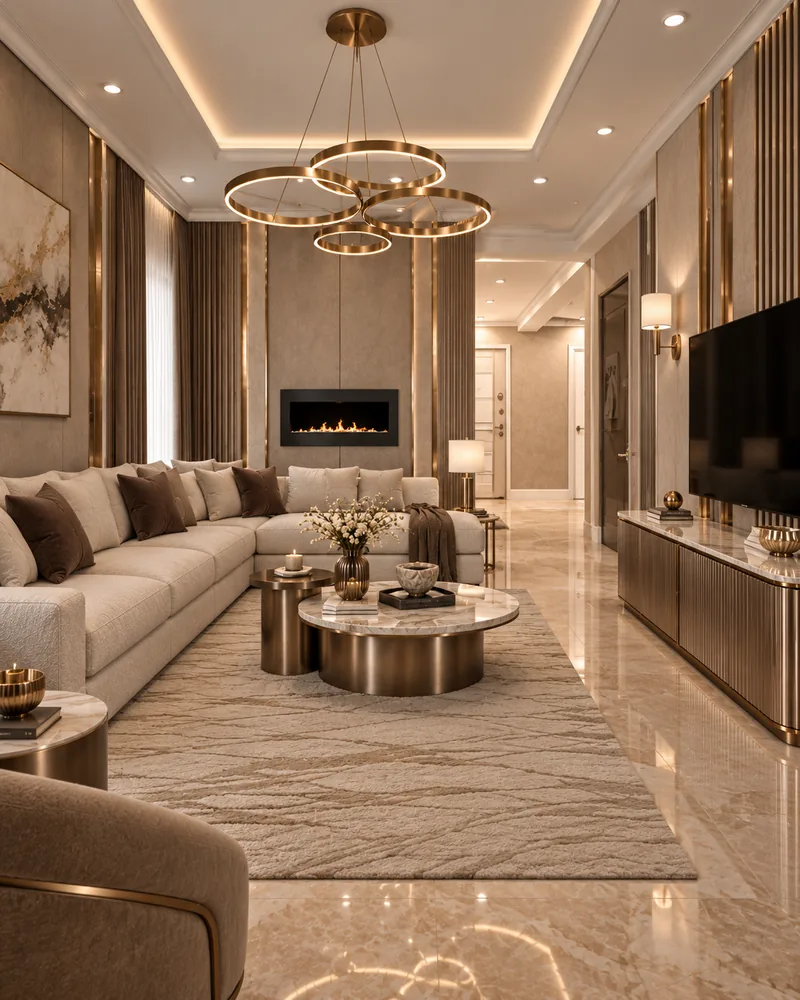
A cove hides the source of light and lets the ceiling itself glow. It is the simplest way to make a living room feel softer in the evening, because the light reaches you after touching the ceiling rather than straight from a lamp.
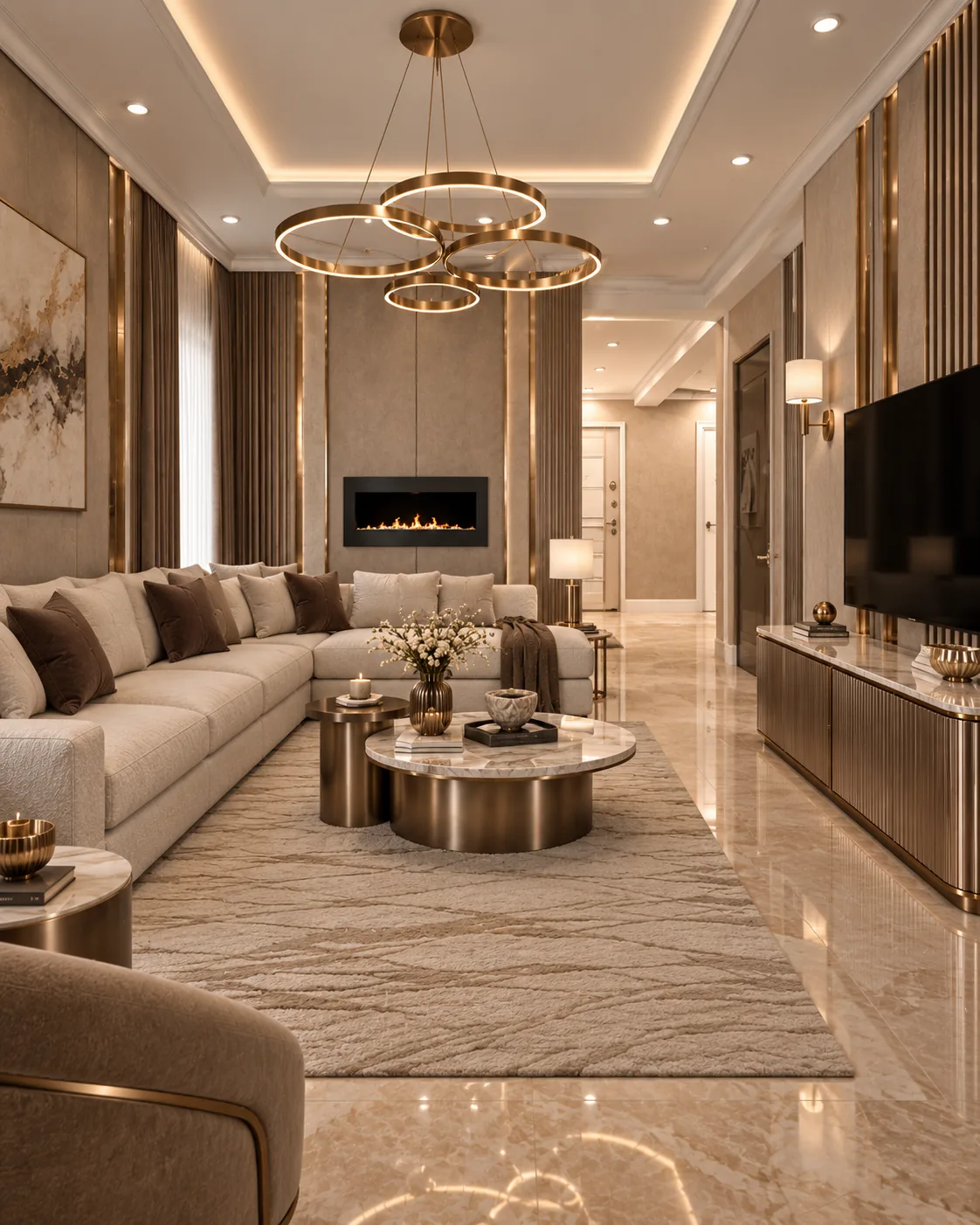
In a contemporary house on two floors, the living room gathers an ivory corner sofa around a linear fireplace set into a taupe panelled wall, and above it an interlocking brass ring chandelier hangs in a cove-lit ceiling. The cove gives a calm background glow, the chandelier gives a focal point, and the two together let the family choose between a bright room and a quiet one without changing anything else.
A recessed ceiling can frame the heart of an open living space
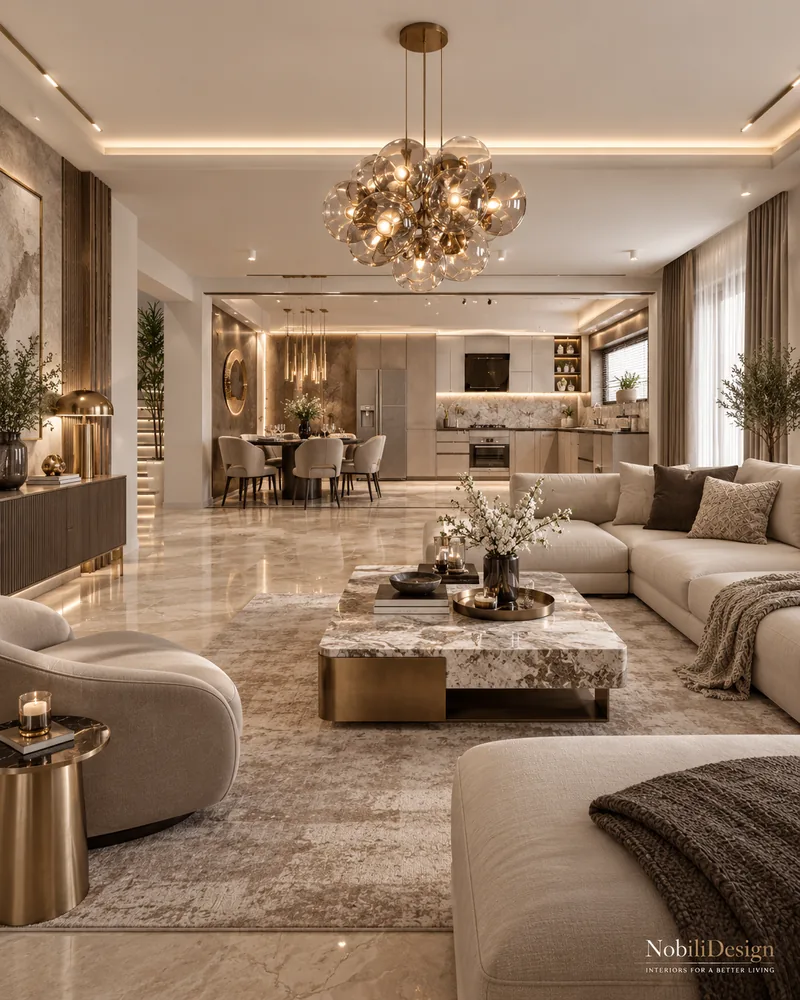
In an open-plan house, the ceiling is often the only element that can say where the living room begins. A recess, outlined by a line of light, draws an invisible room on the floor without adding a single wall.
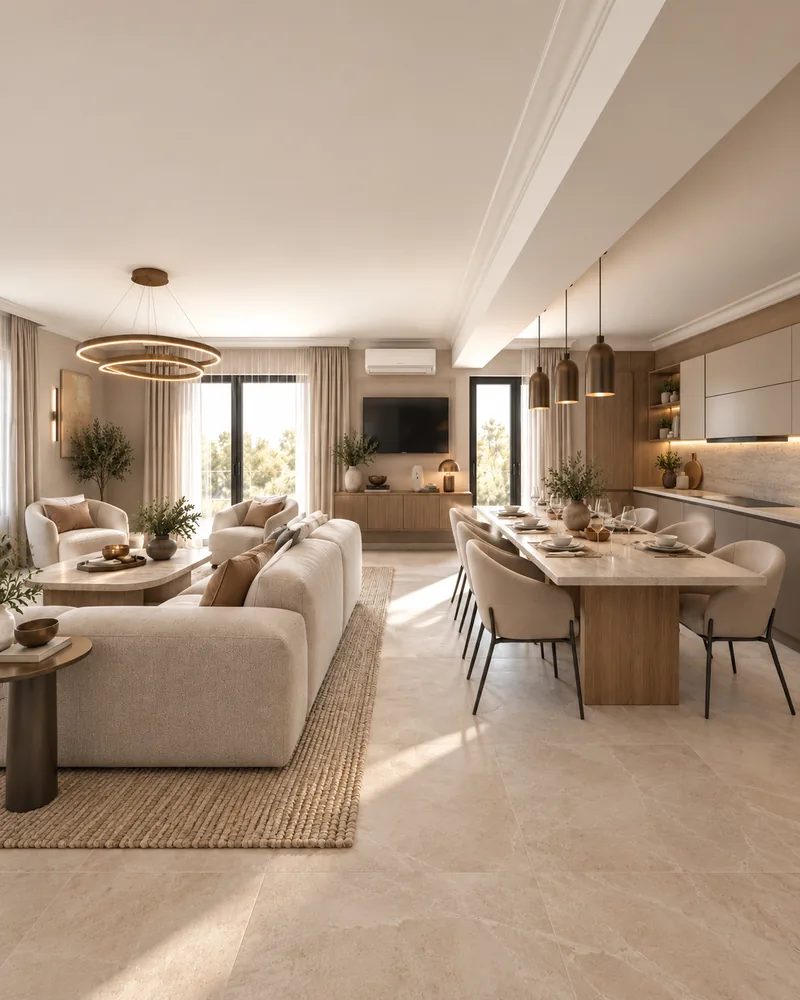
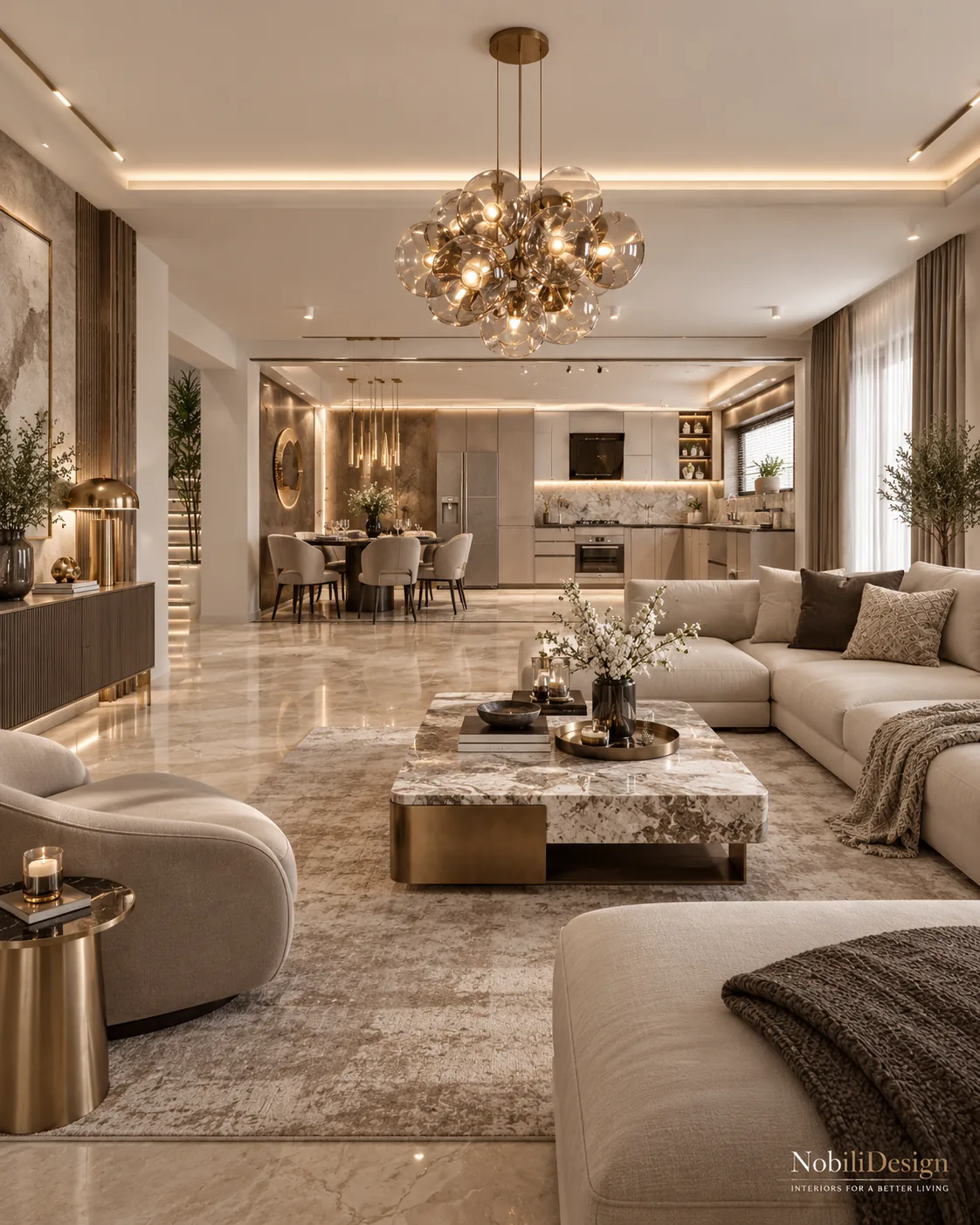
In a modern house with open-plan living that we designed, a large cream sectional and a tufted chaise face a marble-effect TV wall between fluted walnut panels, and a bubble glass chandelier hangs in a recessed LED cove. The recess sits exactly above the seating, so the living area reads as a room of its own while the kitchen and dining space stay open beside it, light and continuous.
 View full size
Know when the ceiling should stay quiet and when it should lead
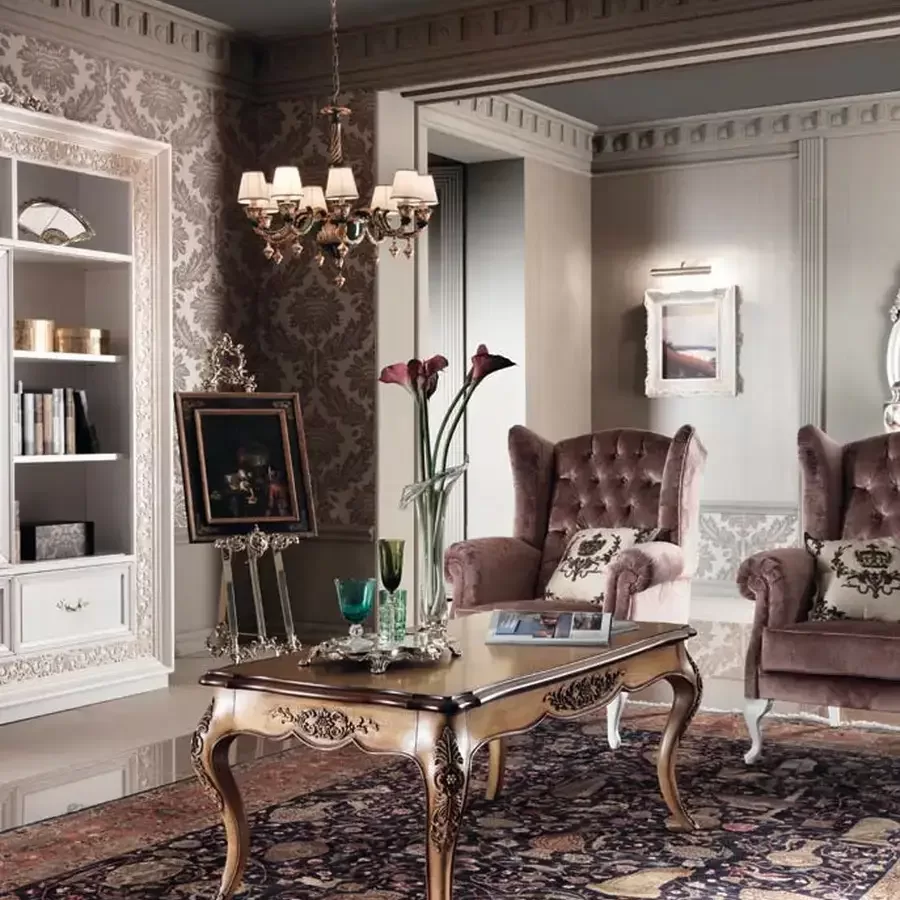
Not every ceiling deserves to be noticed, and many living rooms are better for a quiet one. When the walls already carry panelling, a strong fireplace or a dramatic staircase, the ceiling should step back and offer only soft, even light.
When the room is plain, low or very open, the ceiling can take the lead with a cove, a recess or a chandelier chosen as carefully as the sofa. Our living room interior design always starts with this question of balance, because the ceiling, the walls and the furniture must share one idea rather than compete. The same reasoning guides our house interior design as a whole, from the entrance to the last room upstairs.
If you are planning a living room, send us the floor plan with the ceiling height and a few words about how you spend your evenings there. We will tell you whether the ceiling should stay quiet or lead the room, and how we would light it.