A living room should be lit for the hours you spend in it
A living room is used most after dark, so its light has to be planned for the evening and not for the photograph taken at noon. When a single fitting in the middle of the ceiling does all the work, the room looks flat and slightly empty, even if every piece of furniture in it is beautiful. We would rather spread the light across several heights and let each layer be dimmed on its own, so the same room can feel open in the afternoon and close and calm after dinner.
Before we sketch any living room lighting ideas, we ask where you sit when the house goes quiet, what you do there in the evening and which wall you look at from the sofa. The answers tell us where the light should fall, and they usually show that the brightest spot in the room should be near the people rather than above the coffee table.
 View full size
The central piece gives the room its character before its brightness
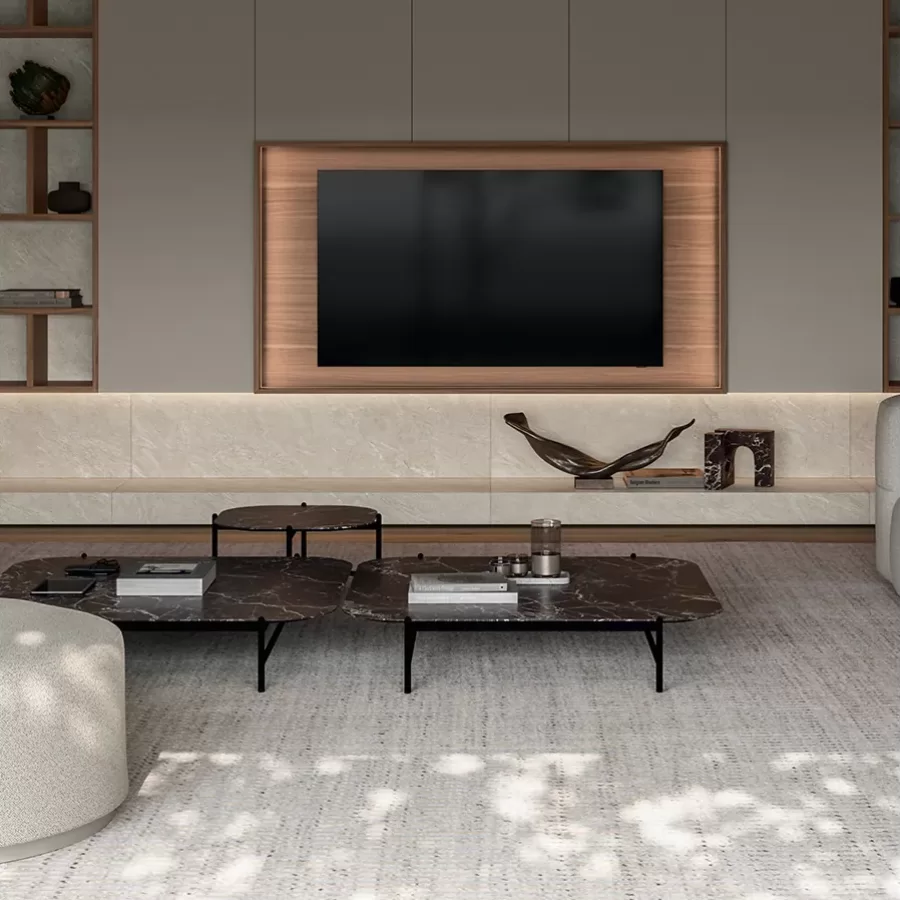
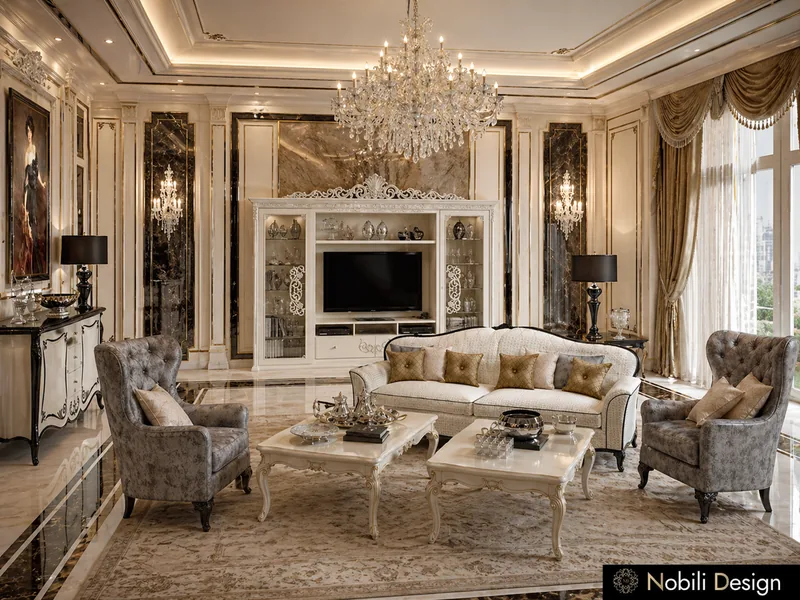
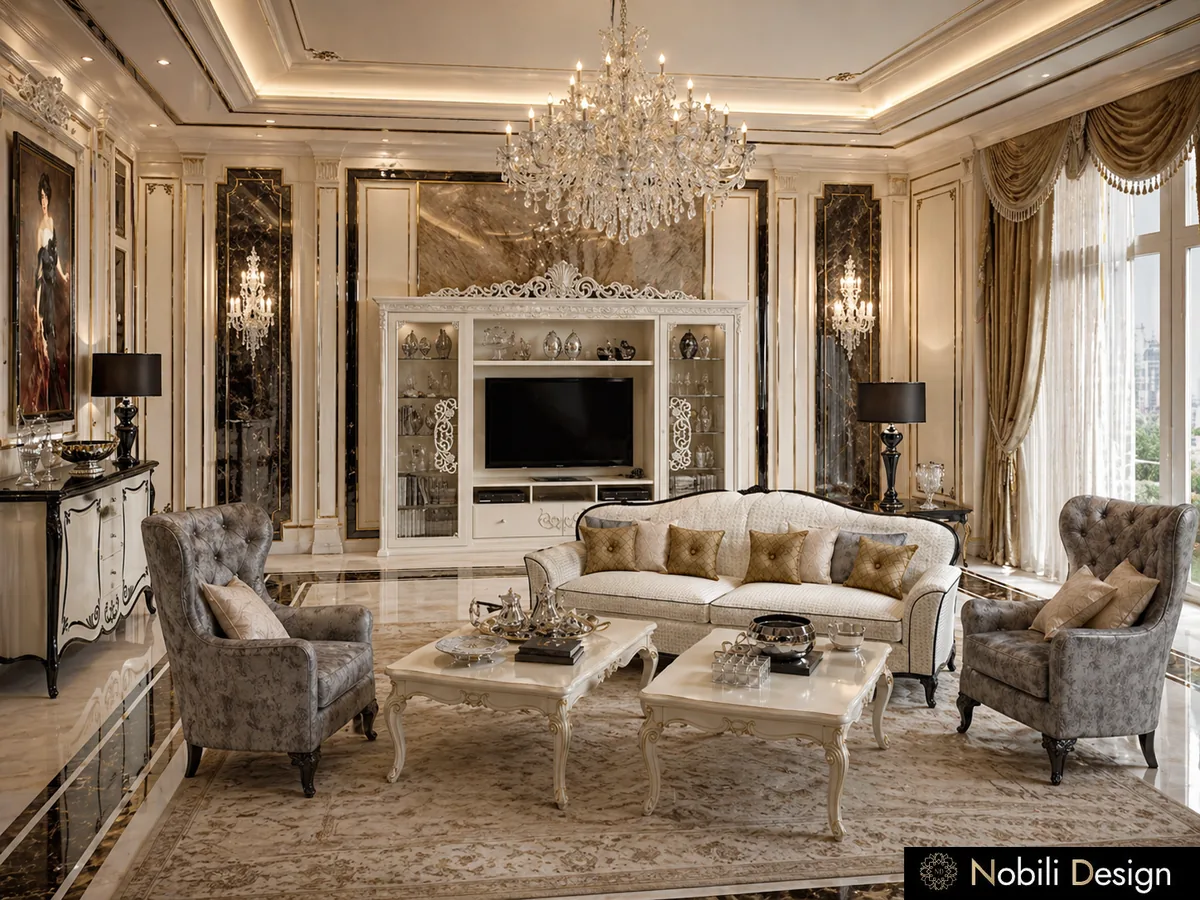
A chandelier or a large pendant at the centre of a living room is the piece that sets the tone, and we choose it for its presence long before we think of how much light it gives. Asked to light the whole room alone, it becomes harsh, so we keep it on a dimmer and treat it as the jewel of the ceiling. In a classic villa we designed, a crystal chandelier hangs above a carved ivory TV cabinet, an ivory sofa and grey tufted armchairs set between dark marble panels, and the crystal catches the light against the dark stone in a way no plain fitting could.
That contrast is the reason we chose it for that room. The dark marble absorbs light, the ivory reflects it, and the chandelier sits between the two as the point the eye returns to, while softer sources around the seating do the real work of the evening.
Pendants belong above the furniture, never in the centre by habit
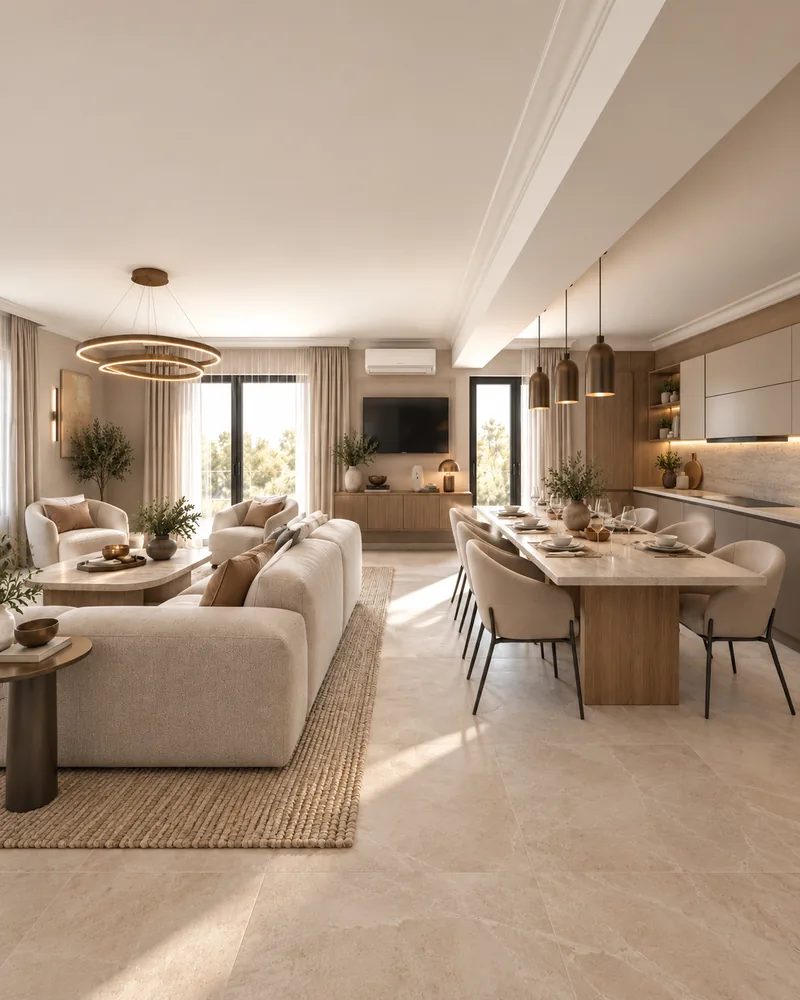
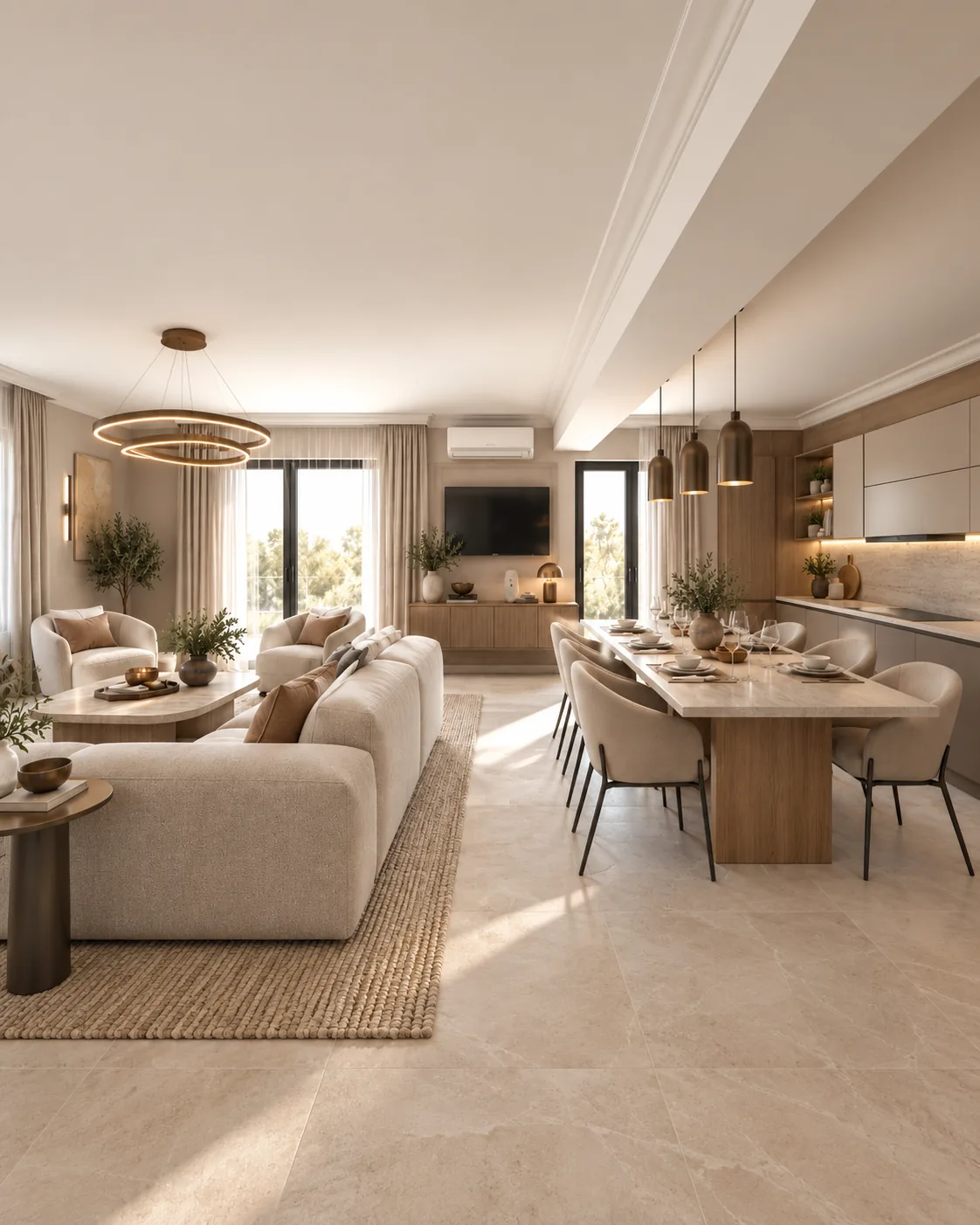
Pendants should hang where something happens beneath them, which is why we position them over a table or a group of seats instead of on the ceiling grid. A pendant above an empty floor only lights the rug, while the same pendant over the dining table turns the meal into the brightest moment of the evening. In a modern apartment we designed with open-plan living, brass ring pendants hang above bouclé sofas and curved armchairs that face a floating TV console on a wood-panelled wall, and the stone-top dining table stands between the living area and the kitchen.
In an open plan like this one, the pendants also tell you where one zone ends and the next begins. The warm ring of brass over the seating and the light above the table divide the space more gently than any partition, and the wood panelling softens the glow so the whole room stays warm without glare.
Lit niches turn a wall into a quiet source of evening light
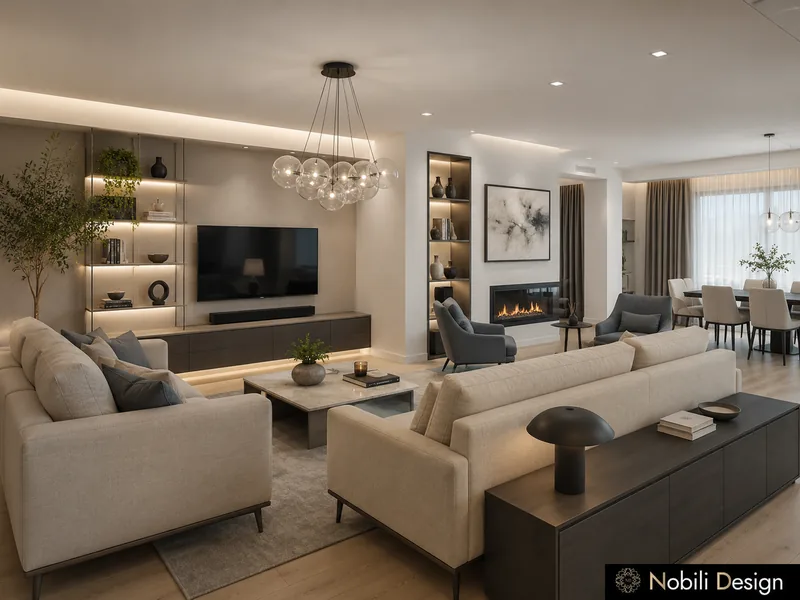
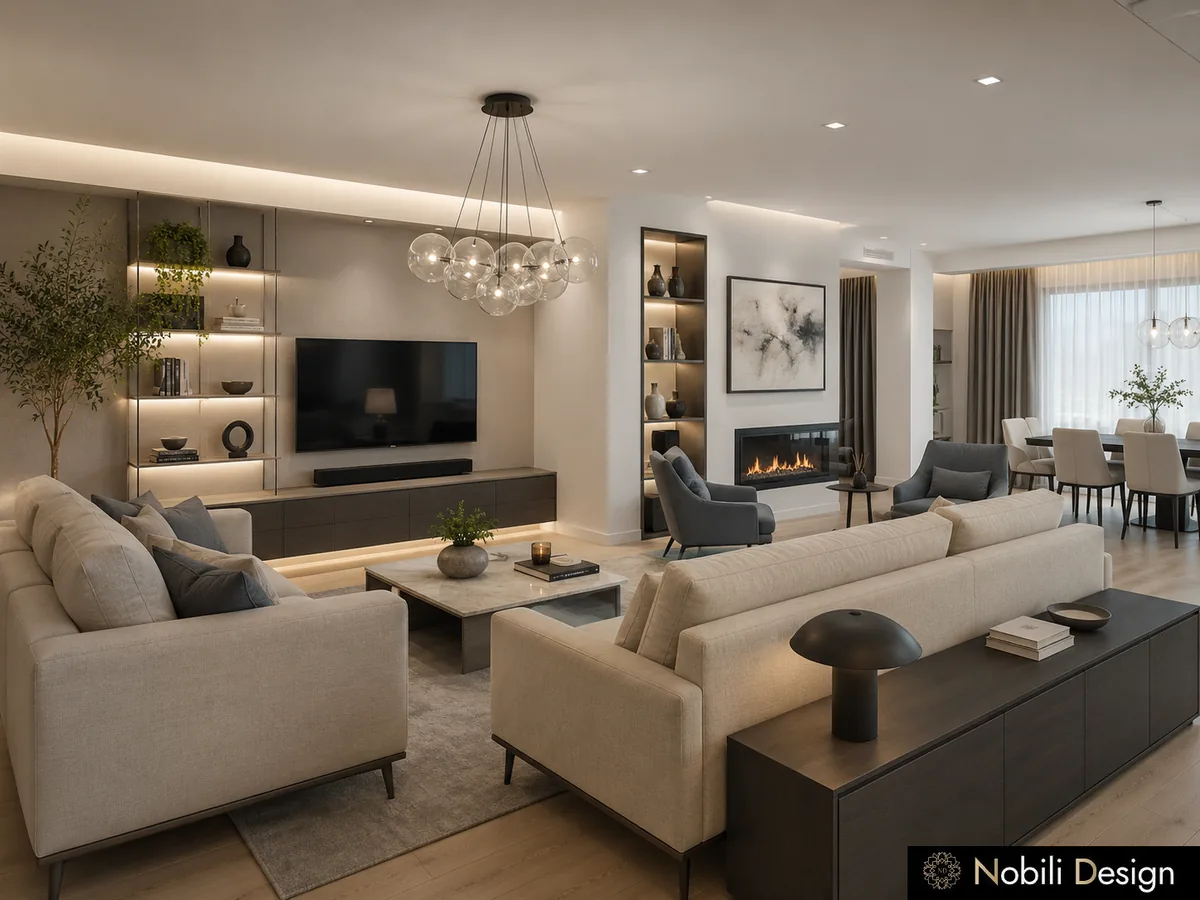
Light hidden inside shelving or niches is the layer that makes a living room feel finished, because it washes a wall softly and lets you switch off the ceiling entirely. Objects on the shelves become part of the atmosphere, and the room gains depth without a single extra lamp on the floor. In a modern house we designed, cream sofas and grey armchairs face a wall with a linear fireplace, lit niches and a low TV console, under glass bubble chandeliers.
On a quiet evening the niches and the fire carry the room together, and the chandeliers can stay low or remain off. We like this because the light comes from the same wall the sofas already face, so the eye rests there naturally and nobody looks into a bright bulb.
 View full size
Light at the height of conversation is the layer most rooms forget
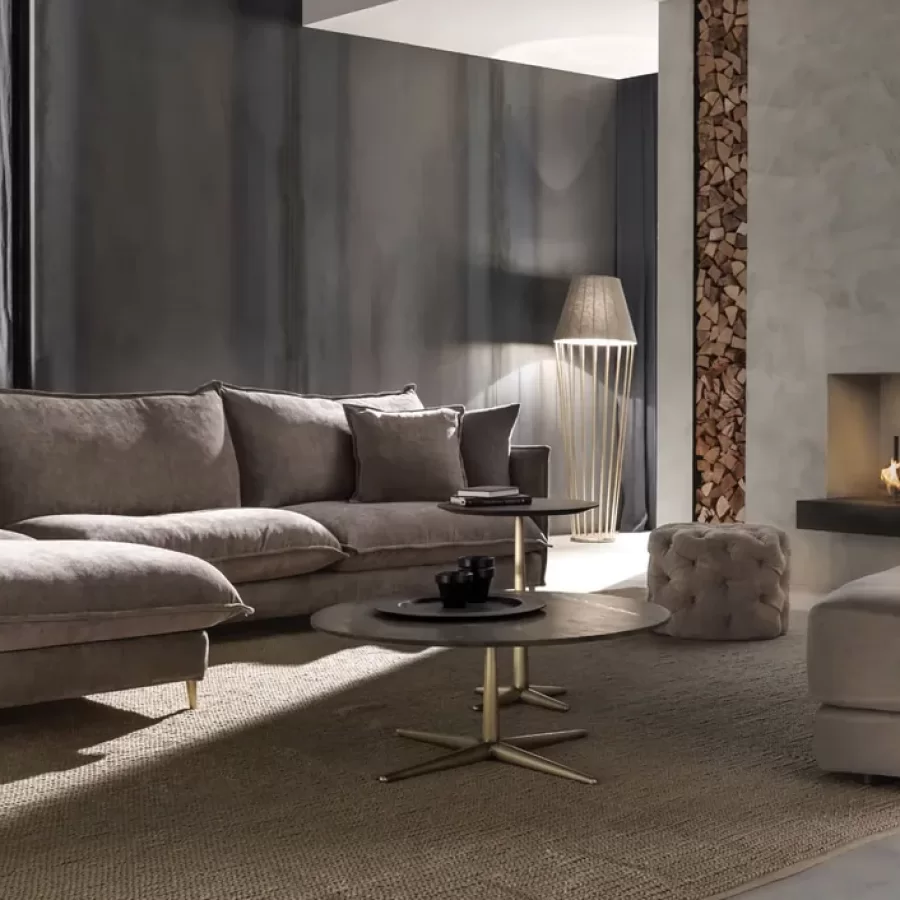
The light that makes people stay in a living room sits at the height of their faces, beside an armchair or at the end of a sofa, and it is the layer most plans leave out. A table lamp or a floor lamp with a fabric shade gives a warm pool of light where people talk and read, and it flatters everyone in it far more than any ceiling fitting. We plan these positions together with the furniture, so the sockets are where the lamps belong and no cable crosses the rug.
This is how we approach living room interior design in houses and villas, and the same layered thinking guides apartment interior design, where one open space often has to hold the sofa, the dining table and the kitchen and still feel intimate once the evening comes.
If you are planning a living room, send us the floor plan and a few words about how you spend your evenings there. We will tell you where we would place the central piece and the pendants, which wall could hold lit shelving and where the softer lamps belong, so the room changes gently from day to night.